Can an RV Be Towed Without Damage?
A practical guide to RV towing risks, preparation, securement, and the information dispatch needs before moving a motorhome or camper.
Updated May 29, 2026 | Category: RV and Bus Towing Guides
An RV can often be towed safely, but it must be matched to the right equipment and handled with its length, height, weight, drivetrain, and attached systems in mind.
This guide is for motorhome owners, RV travelers, families, campground guests, and fleet or shuttle operators who need a careful tow instead of a rushed move.
The damage risks include driveline stress, underbody contact, roof clearance, loose compartments, slide-out issues, and improper securement during loading or transport.
Quick answer
The safest answer is to slow the situation down enough to give dispatch the right facts. Towing is not only about distance. It is about vehicle size, road position, access, damage, destination, and whether the truck that arrives can safely complete the job on the first visit.
If you are in immediate danger, move yourself to a safer place first and follow any instruction from police, fire, highway assistance, property security, or emergency responders. Once the scene is stable, the fastest way to help the tow operator is to give clear location, vehicle, condition, and destination details.
What to do first
- Identify the RV type before requesting a tow. Class A, Class B, Class C, travel trailer, fifth wheel, shuttle bus, and converted bus setups can require different access and tow planning.
- Secure anything that can move. Storage doors, steps, awnings, slide-outs, loose panels, bike racks, and tow-behind attachments should be closed, locked, or described to dispatch.
- Check height and ground clearance. Low trees, canopies, campground roads, sloped driveways, and fuel-station entrances may be more important than the breakdown itself.
- Tell dispatch if the RV can start or air up. Air brake, suspension, steering, and brake conditions affect how the RV should be loaded and whether additional preparation is needed.
- Choose the destination carefully. RV repair facilities, dealers, storage lots, campgrounds, and private driveways may all have different entrance and turning limits.
- Photograph the RV before movement if safe. Photos help document existing damage, cargo position, accessories, and any clearance issue that should be discussed before the tow begins.
What dispatch needs before sending the truck
- RV class, length, approximate weight, and whether it is a motorhome, trailer, camper, or bus-style unit.
- Breakdown condition, including engine, transmission, tire, steering, brake, and suspension notes.
- Whether the RV is loaded with passengers, pets, water, fuel, luggage, or attached gear.
- Access details, including campground loops, lot numbers, gate codes, shoulder width, trees, and turnaround room.
- Destination address and whether the facility can receive a tall or long vehicle.
- Any manufacturer, insurance, or roadside-assistance instructions already provided to the owner.
What not to do
- Do not assume a normal car carrier can handle the RV just because the distance is short.
- Do not leave slide-outs, steps, or accessories unsecured while the vehicle is being prepared.
- Do not choose a destination with unknown height or turning clearance unless someone can confirm access.
- Do not let urgency override the tow setup. RV damage is often caused by rushing the planning details.
Raleigh-area dispatch notes
- Wake County RV towing can involve highways, campgrounds, storage yards, neighborhoods, and repair facilities. Each place changes the approach path and loading space.
- Raleigh-area traffic can make a long RV feel even longer when access is tight. A careful dispatcher will ask about direction of travel and nearby landmarks.
- For campground or event breakdowns, make sure dispatch knows the site number, gate rules, and whether staff will meet the driver.
- For RV owners, the goal is not just moving the vehicle. The goal is moving it without adding roof, body, driveline, or undercarriage damage.
How this helps the tow arrive prepared
A well-prepared towing call gives the dispatcher enough information to send the right operator, the right equipment, and the right destination instructions. That matters for light-duty roadside help, but it matters even more for heavy-duty towing, RV towing, bus towing, commercial trucks, winch-outs, and after-hours scenes where a second trip wastes time.
For JTOWS, the goal is a clear handoff from the customer to dispatch and from dispatch to the driver. The customer should not have to repeat the same details several times, and the tow operator should not arrive without knowing the basic risk points. Good details protect the vehicle, the people on scene, and the final destination.
When to call instead of waiting
Call for towing or roadside help when the vehicle is blocking traffic, sitting in a dangerous place, unable to restart reliably, stuck, damaged, carrying important cargo, or too large for a normal roadside fix. You should also call when you are unsure whether it is safe to keep driving. A vehicle that moves for a minute can still fail again in a worse location.
For businesses, the decision should be even more practical. If the vehicle affects a route, customer appointment, delivery, jobsite, or fleet schedule, early dispatch information can save downtime. A quick call with complete details can be better than waiting for the problem to get more expensive.
How to explain the problem clearly
When you call, use plain words and give the facts in order. Start with where you are, then say what vehicle you have, what happened, whether the vehicle can move, and where it needs to go. That order helps dispatch decide whether this is a light-duty, roadside, commercial, RV, bus, winch-out, or heavy-duty situation.
Try to separate what you know from what you are guessing. For example, saying “the front right tire is flat and the truck is loaded” is more useful than saying “I think the axle is broken” unless you can see damage. If you do not know the cause, describe the symptom. Smoke, leaking fluid, no crank, stuck brake, no steering, flat tire, locked keys, and warning lights all point dispatch in a different direction.
- Use landmarks that a driver can see from the road, such as a store name, entrance, exit ramp, dock number, building number, or cross street.
- Give the safest approach if you know it, especially in apartment complexes, business parks, construction areas, warehouses, gated lots, or highway shoulders.
- Say what changed since the first call, including police arrival, worsening traffic, weather, smoke, a vehicle that starts again, or a passenger who feels unsafe.
- Send photos if dispatch asks. A few safe photos can show damage, space, vehicle size, road position, and whether special equipment may be needed.
A simple call script
If the situation feels stressful, use this simple format: “I need towing or roadside help. I am at this exact location. The vehicle is this type. The problem is this. The vehicle can or cannot roll, steer, and brake. The destination is this address. The safety concern is this.” That short script gives dispatch the core facts without turning the call into a long explanation.
The script also keeps the service page and the article working together. The service page gives you the fast path to request help. The article gives you the deeper explanation when you have time to read. That is the best balance for SEO and for real customers because people in an emergency do not want a bloated service page, but they do need complete guidance somewhere on the site.
Why this article exists on JTOWS
JTOWS is building a Raleigh-area towing resource that answers the questions people actually ask before, during, and after a tow. The goal is not to stuff a page with keywords. The goal is to give drivers, RV owners, commercial operators, fleet teams, and roadside callers a practical answer that can help them make a safer and faster decision.
That is why the long article lives here and the service pages stay shorter. The service page should help a customer act. The article should help the customer understand. Linking the two together gives search engines a clearer topical map and gives visitors the choice between immediate dispatch and deeper reading.
Related JTOWS service pages
These service pages are the shortest path from this guide to the right JTOWS response.
Bottom line
Use this guide to make the call calmer and more complete. Give dispatch the location, vehicle type, vehicle condition, safety concerns, and destination. Then stay reachable while help is being assigned. That simple process gives JTOWS the best chance to send the right help without adding confusion to an already stressful situation.
Related JTOWS resources
Use these towing, roadside, and local help pages to match the right truck, service area, or next step.
Related services
More towing guides
- What to Do If Your Box Truck Breaks Down in Raleigh
- What to Do While Waiting for a Tow
- What Information Dispatch Needs Before Sending a Tow
- Heavy-Duty Towing vs. Regular Towing: What Is the Difference?
- Can a Police Officer Be on Scene During a Tow?
- Do You Tow Buses?
- Do You Tow Commercial Trucks?
- Do You Work After Hours?
- Do You Tow an Unattended Vehicle?
- How Fast Can a Tow Truck Arrive?
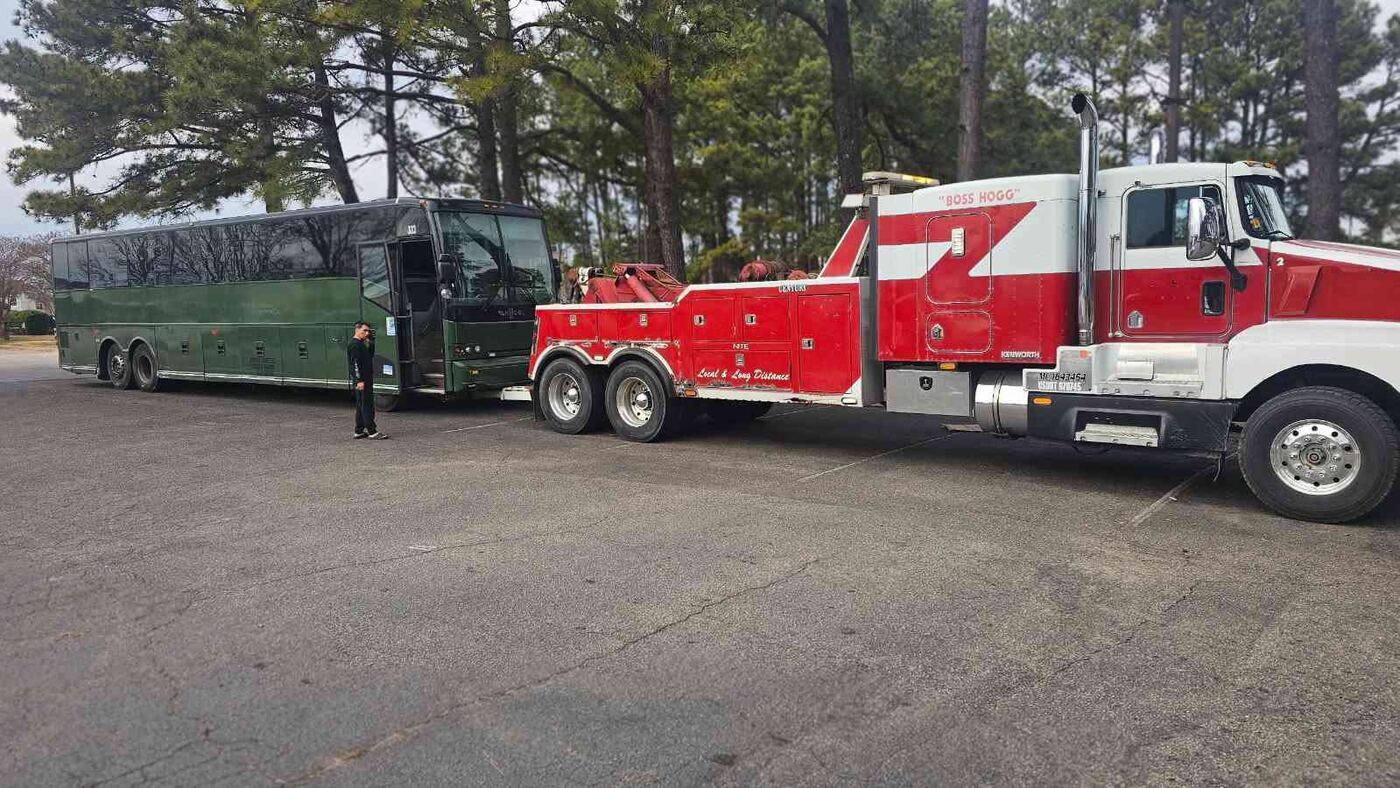
Photos from actual JTOWS work
Leave a Reply