Author: Junior Sloan

  • What Raleigh Drivers Should Share Before Roadside Help Arrives

    When a driver requests roadside help, the right details make the dispatch faster and help the tow truck arrive prepared. A clear pickup location, vehicle description, and problem summary can save time when traffic, parking lots, apartment entrances, or highway shoulders make the scene harder to find.

    Helpful details to give before the truck leaves

    • The exact address, business name, cross street, or parking lot entrance closest to the vehicle.
    • The vehicle year, make, model, color, and license plate if available.
    • Whether the vehicle rolls, starts, has keys present, or is blocked in.
    • Any safety concern, including roadside shoulder location, heavy traffic, locked gates, low clearance, or a vehicle in a ditch.
    • The destination address if the vehicle needs to be towed instead of serviced on-site.

    Those details help JTOWS decide whether to send standard towing, roadside assistance, or a different response. They also help the driver avoid delays caused by wrong entrances, missing vehicle information, or equipment that does not match the job.

    If the situation changes while waiting, drivers should update dispatch so the tow truck operator has the most accurate information before arrival.
  • Why Accurate Pickup Details Matter During a Tow Request

    A tow request moves faster when dispatch has a clear pickup location from the start. Street addresses are helpful, but extra details can make the difference when the vehicle is in a parking lot, apartment complex, shopping center, gated area, or on the shoulder of a busy road.

    Useful pickup details include nearby landmarks, cross streets, business names, building numbers, gate codes, parking row markers, and whether the vehicle is easy for a tow truck to access. If the vehicle cannot roll, is blocked in, or needs a flatbed, that should be shared early too.

    Accurate details help JTOWS send the right help, reduce back-and-forth phone calls, and give the driver a better chance of finding the customer quickly. That means less waiting and a cleaner roadside experience.

    Customers who expect to use roadside or towing services more than once can also complete the membership application to join the JTOWS family and make future requests easier.

  • What Information Helps JTOWS Send the Right Tow Truck Faster

    When someone needs roadside help, the fastest dispatch starts with clear information. A few accurate details help JTOWS understand the situation, send the right truck, and reduce delays before the driver is even on the way.

    The most useful details are the pickup location, the drop-off destination, the vehicle type, and what happened. A flat tire, dead battery, lockout, accident, stuck vehicle, or no-start call can each require a different response.

    If you can safely provide it, include landmarks, parking lot names, apartment building numbers, gate codes, or nearby cross streets. These details matter because GPS pins are not always exact, especially in shopping centers, apartment complexes, and highway shoulders.

    Photos can also help. A quick picture of the vehicle position, damage, tire issue, or access space can help dispatch and the driver prepare before arrival.

    JTOWS is built around simple ordering, clear dispatch, and better communication. If you use JTOWS often, filling out the membership application is another way to join the JTOWS family and make future service requests easier.

  • How Membership Savings Help Repeat Drivers

    For drivers who may need help more than once, membership can turn a frustrating moment into a simpler repeat process. Instead of starting from scratch every time, the customer gets a more familiar path and clearer savings.

    Member pricing gives JTOWS a reason for customers to stay inside the platform rather than calling around each time they need help. It also creates a stronger long-term relationship instead of a one-time transaction.

    The goal is not to block non-members. Anyone should still be able to order a tow. Membership just makes the experience better for people who come back.

  • Why Live Truck Tracking Matters During a Breakdown

    When a driver is already stressed, uncertainty makes everything worse. Live truck tracking helps by replacing guesswork with clear updates and a visible ETA.

    Knowing where the driver is, whether the truck is moving, and how much longer the wait is expected to be creates a calmer experience for the customer. It also reduces the need for extra status calls and follow-up messages.

    For a modern towing brand, that visibility is not just a convenience. It is one of the most important trust builders in the whole service experience.

  • Roadside Help vs. Towing: How To Know What You Need

    Not every roadside problem requires a full tow. In some cases, roadside help is enough to get the vehicle moving again. In others, towing is the safer and smarter choice.

    Common roadside saves

    When roadside help can solve the problem without a tow

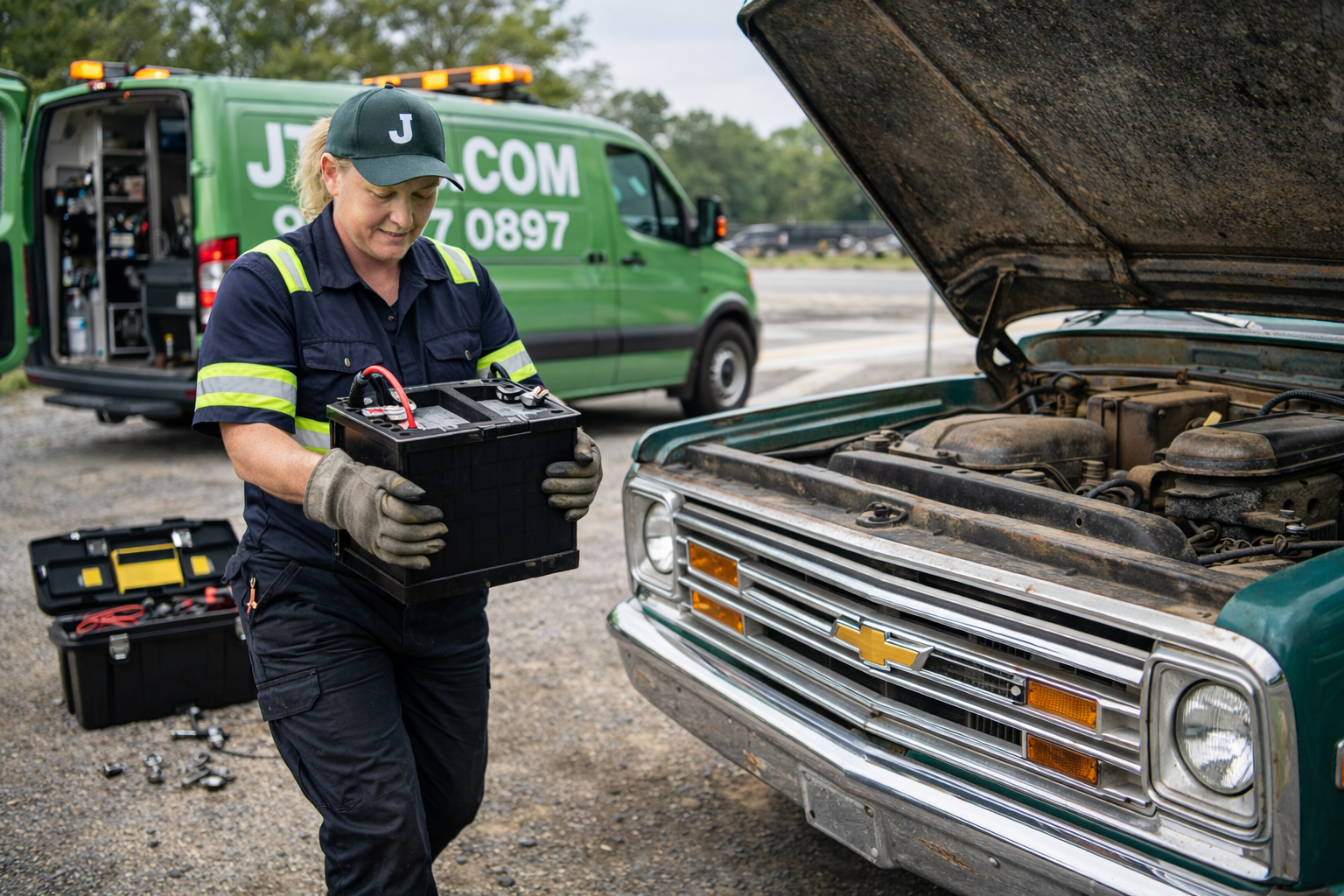
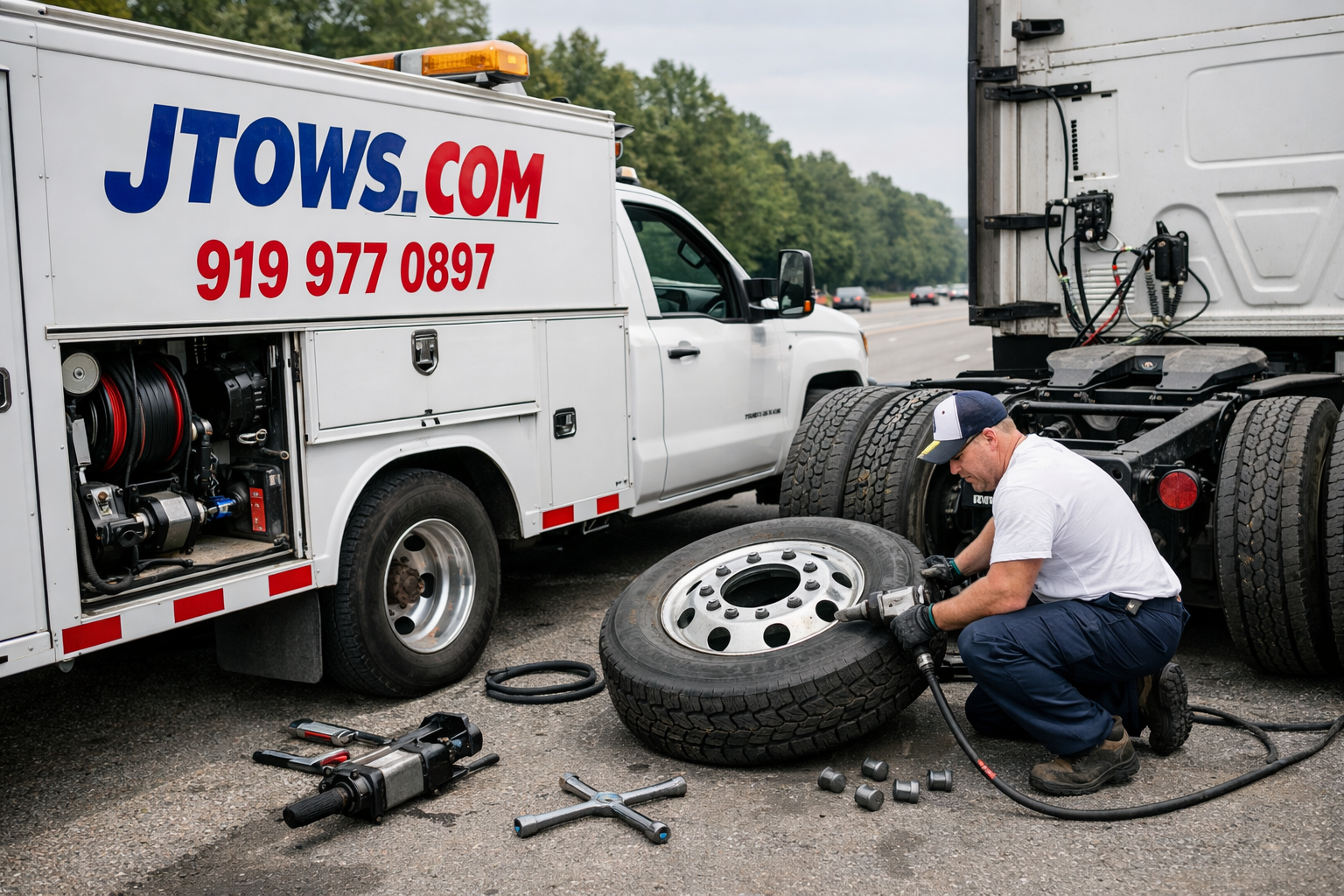
    Battery jumps and tire changes are two of the clearest examples of situations where a driver may need help fast, but not full vehicle transport.

    JTOWS battery jump example

    Battery issue

    If the vehicle is otherwise safe and the main problem is a dead battery, roadside assistance may get the customer back on the road quickly.

    JTOWS tire change example

    Tire problem

    If the issue is a flat tire and the vehicle can be safely serviced on-site, a tire change can often solve the problem faster than dispatching a full tow.

    If the vehicle has a mechanical failure, collision damage, steering problems, or anything that makes driving unsafe, towing is usually the right move. If the issue is lighter and the vehicle can be safely restored on-site, roadside assistance may be enough.

    The most important thing is not trying to force a vehicle to keep moving when it should be transported. A clear dispatch process helps the customer get the right service without wasting time.

  • What To Do While Waiting for a Tow Truck

    Waiting for a tow truck can feel stressful, especially when you are stranded somewhere unfamiliar or dealing with traffic around your vehicle. The best first step is to move somewhere safe if you can, turn on your hazard lights, and keep your phone nearby so dispatch can reach you quickly.

    Once help is on the way, stay ready with the basics: your exact location, the vehicle type, the issue you are dealing with, and the destination if a tow is needed. That makes it easier for dispatch to match the right truck to the job.

    Good communication can make the wait feel shorter. Real-time updates and live truck tracking help customers know what is happening instead of guessing whether the driver is close or still far away.

Need help now?Call JTOWS(919) 407-8149